
As President Donald Trump voiced growing frustration Wednesday with Iranian negotiators, accusing them of lying and cheating, the latest escalation has exposed an even more fundamental problem for Washington: whether the officials at the negotiating table have the power to deliver an agreement — or whether anyone in Tehran does.
"I don’t know if we’re going to have a deal. We may just do it without a deal," Trump said at the NATO summit in Ankara. "These people, they lie and they cheat."
But Trump’s frustration with Iran’s negotiators is only part of the problem. Since the death of Ayatollah Ali Khamenei, it has become increasingly unclear who in Tehran has the authority to make — and enforce — an agreement.
Yet Trump’s declaration does not necessarily mean diplomacy has been permanently abandoned.
Behnam Ben Taleblu, senior director of the Iran program at the Foundation for Defense of Democracies, told Fox News Digital that the clearest evidence would be the restoration of the U.S. blockade, the introduction of additional military forces or a new round of major economic sanctions.
Otherwise, he said, Trump may continue operating in the "gray zone" between negotiations and open war while keeping his options available.
The more difficult question is why Tehran would jeopardize sanctions relief and risk overwhelming American firepower when its military has already been severely degraded.
Ben Taleblu said Iran’s leaders appear to believe escalation is essential to the survival of the Islamic Republic.
"This is a regime that is weaker, but lethal, and less capable, but more confident," he said. Iran’s leadership believes its adversaries have vulnerable economic and military interests throughout the Gulf, he added, while the regime itself is more willing to accept destruction.
"Their survival and their military success and their political success runs through more, not less, escalation," he said.
Lisa Daftari, foreign policy analyst and the editor-in-chief of The Foreign Desk, agrees the escalation is deliberate, aimed at turning regional instability into leverage.
"By targeting commercial shipping and Arab states, the regime is signaling that it can hold global energy flows and America’s regional partners hostage to extract leverage, distract from its domestic crisis, and test U.S. red lines," Daftari told Fox News Digital.
She said Tehran is betting that Washington and its Arab partners will be unwilling to sustain another war and will ultimately back down first.
"The regime’s core weapon is time," Daftari said. "By escalating in the Persian Gulf and attacking ships and Arab states, they are creating rolling crises that raise the cost of confronting them while they consolidate power at home."
Daftari argued that the strategy reflects the Islamic Republic’s longstanding character rather than a temporary response to pressure.
"This regime was never designed to be reformed or softened," she said. "What they are showing us now is exactly who they intend to remain: a hardline, revolutionary regime determined to stay in power."
But determining how that strategy is translated into action is more complicated. Authority in Tehran appears divided, raising questions about who is directing the escalation and whether the officials negotiating with Washington can commit the broader security establishment.
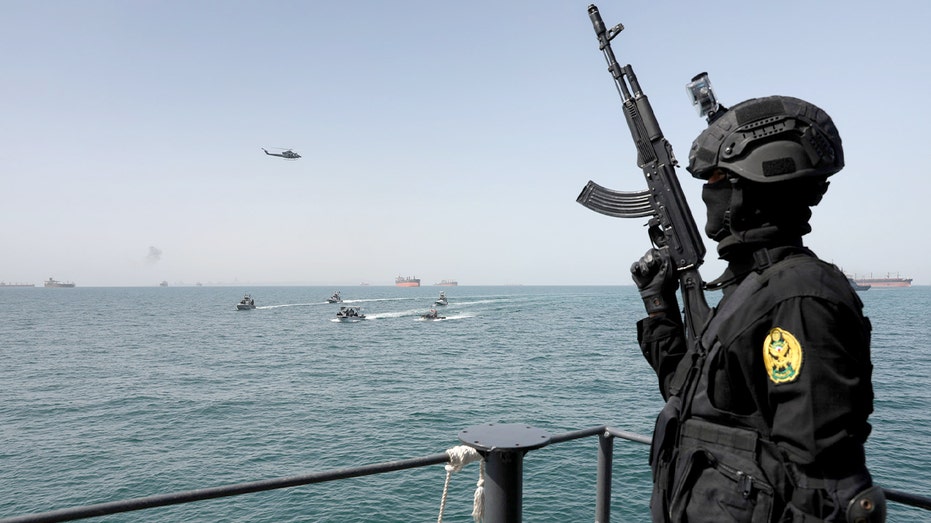
That division is already visible in the dispute over the Strait of Hormuz.
A Middle Eastern source familiar with the issue told Fox News Digital that Tehran and Washington are operating from fundamentally different readings of Clause five of the memorandum. The publicly released text says Iran will use its "best efforts" to arrange safe commercial passage through the strait without charge for 60 days, while removing military and technical obstacles and conducting demining operations. It does not expressly state that foreign vessels must obtain Iran’s approval or use routes designated by Tehran.
According to the source, Iran interprets that language as giving it responsibility — and therefore authority — to coordinate shipping and determine the routes vessels use during the interim period. Washington’s interpretation is that Iran agreed to lift its maritime blockade and fully reopen the international waterway.
When the two sides have different interpretations of a single page, how do they intend to write a treaty, the source said.
Iran views control over passage through the Strait of Hormuz as one of its last major sources of leverage over the United States, Gulf governments and the global economy, the source said, "That is the heart of the matter."
Taken together, the experts’ assessments suggest Tehran is unlikely to face a simple choice between surrendering to Trump’s pressure and returning to negotiations. Ben Taleblu said the regime believes its survival depends on "more, not less, escalation," while Daftari said it is deliberately "playing out the clock" by creating repeated regional crises. That raises the prospect that, even if Iranian officials return to the table, the IRGC could continue targeting commercial shipping, U.S. interests and American allies to preserve its leverage and strengthen its position inside Iran.