
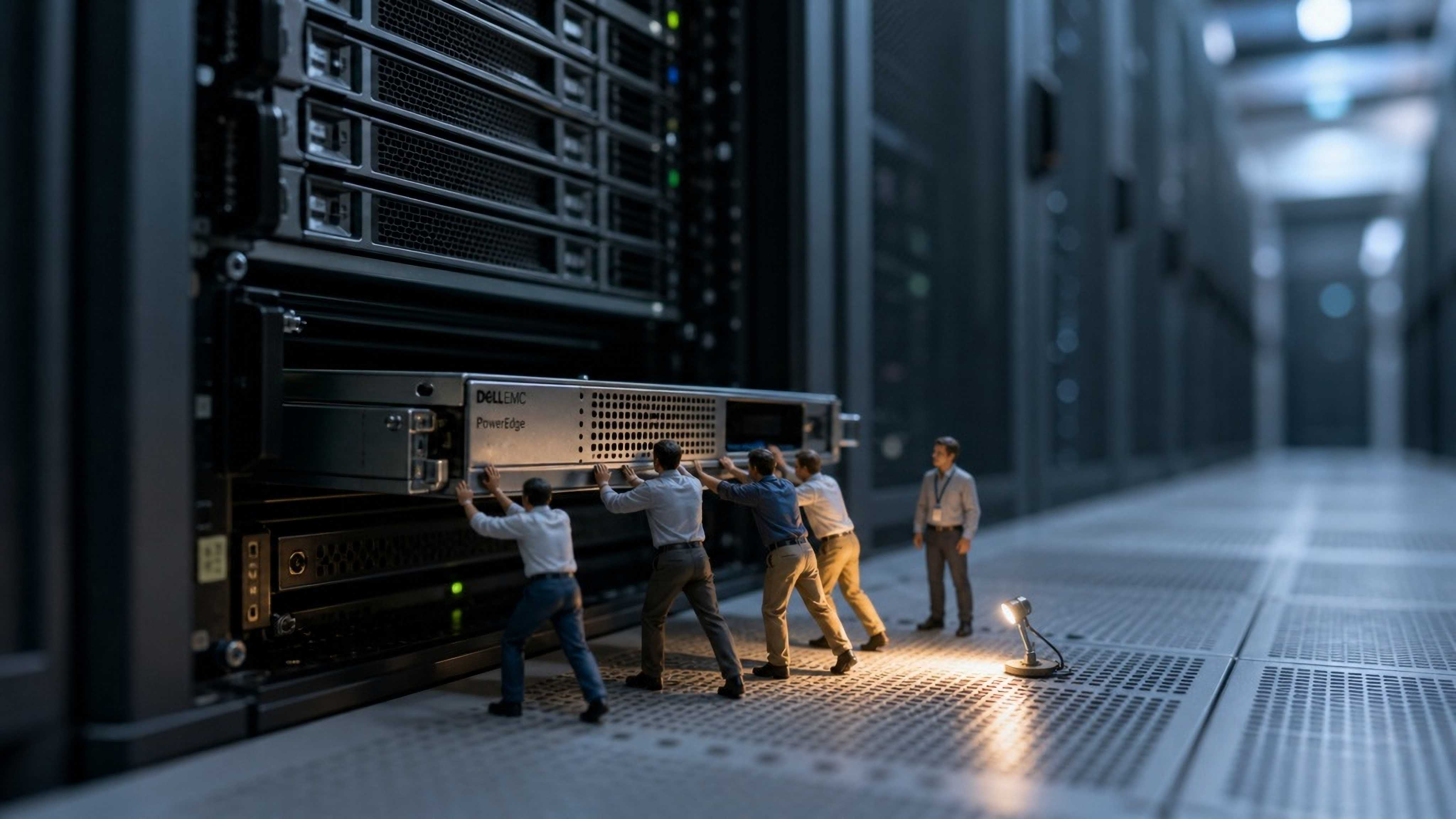
In mid-July, New York became the first state to impose a state-wide moratorium on new data center construction.
“Data center development threatens to hike up utility bills, deplete our natural resources, and create uncertainty for New Yorkers,” wrote Governor Kathy Hochul in her executive order. The moratorium is planned to last for a year, and the state will use the time to research the impact of data centers on energy demand and require data centers to either pay more for their energy or supply their own.
And 127 other U.S. jurisdictions have similar moratoriums, according to the U.S. Data Center Moratorium Tracker.
More restrictions are proposed, both at the state and at the federal level. According to Data Center Watch, at least 75 U.S. data center projects, worth about $130 billion, were blocked or delayed in the first quarter of 2026, the largest quarterly number on record—and roughly equal to the total for all of 2025. And 71% of Americans now oppose data center construction in their area, according to a survey by Embold Research, up from just 42% last summer.
The main reason? As with the New York state moratorium, energy costs are the top issue.
Data centers are projected to increase average electricity costs by 6% to 29% by 2030, according to research from North Carolina State University, Carnegie Mellon University, the University of Pittsburgh, and the University of Toronto. Some states will see increases of as much as 57%, with Virginia and Texas hit the hardest, the group found.
There were bans and moratoriums on data centers even before the current AI boom, when data centers required 10 to 25 megawatts of power, says Gartner analyst Autumn Stanish. “Now there’s an expansion of those facilities, reaching 100 megawatts. And some builds are as big as 2 gigawatts of power. There’s one in Louisiana that’s planned to consume 5 gigawatts of power.”
Just how much is 5 gigawatts? Enough to power 4 million homes—nearly all the homes in Michigan or more than the total number of households in New York City— according to the Electric Power Research Institute.
That’s a big shift, Stanish says. U.S. electricity consumption has been relatively level for the past 30 years, and with the lack of new demand, there’s been less new construction, and the grid has started to age. “And now we’re struggling,” she says. “We need to ramp up capacity, but it’s going to take time to get there.”
According to Data Center Map, there are now over 4,500 data centers in the U.S., which is more than in the next 16 countries combined. And it’s not enough. The overall vacancy rate in North American data centers is now 0.9%, states a June CBRE report.
“Right now, the data center market is very competitive in terms of trying to grab capacity,” says Ryan Mallory, CEO at Flexential, a colocation provider with 42 data centers in 18 U.S. markets and four more under development. “We’re in the process of acquiring a number of additional properties,” Mallory adds. “You have to be planning for the future.”
But the demand for space is even higher than the pace of construction. “Most capacity out to 2027 is completely sold, not just for Flexential, but for any data center out there,” Mallory says.
Flexential has an easier time finding locations than other data center companies because its facilities are typically in the 22 to 36 megawatt range, which is a reasonable size to connect to a power company. “Generally, they either have the infrastructure ready to go, or we can work with them to have power available in the near term,” Mallory says. “We’re not coming in asking for 500 megawatts on day one or 1 gigawatt in twelve months.”
And if the local utility can’t supply enough power and needs to build more generation or transmission capacity? “We would pay our fair share of whatever that augment would be,” Mallory says. “We would not expect any other use to pay for what we would take.”
In addition, Flexential also has 100% generator backup in its data centers in case there’s an issue with the grid. Power concerns are the No. 1 factor when Flexential is deciding where to locate its next data center, Mallory says.
This constraint on data centers is affecting AI rollouts. According to Flexential’s annual survey of IT decision makers at large organizations, released in May, power is now the main constraint to AI deployment nationwide. When deciding where to put AI workloads, 89% of respondents said that access to reliable grid power was one of the most important factors, and 72% said they had moderate or extreme concern about electricity price volatility. In addition, 82% of organizations said that limited access to high-performance AI compute is a moderate or severe constraint.
In the big picture, global electricity demand grew by 3% in 2025—but energy demand from data centers grew by 17%, according to the International Energy Agency. And demand from AI-focused data centers, in particular, grew by 50%. The largest tech companies spent more than $400 billion on capital expenditures in 2025, and that number is expected to increase by 75% in 2026. And AI factory capacity more than tripled in the last 18 months, according to the agency.
Real estate advisory firm Newmark noted that energy constraints and delayed grid connections are holding back new data center projects. It cited permitting delays for new gas plants, congested grid-interconnection queues, and uncertain timelines for next-generation energy solutions among the issues. As a result, data center capacity won’t be able to meet forecasted AI demand, and will limit how fast AI adoption can scale, Newmark predicted.
Fastest data center growth on record
There aren’t enough data centers being built—even though the number of data centers being built, despite all the delays, all the opposition, and all the moratoriums, is enormous. According to Newmark, there are now 280 data center projects underway in 32 states, with development at an all-time high. Data centers is the only commercial real estate sector showing accelerating construction growth, the firm reports.
Other researchers corroborate this report. According to economists at ConstructConnect, $58 billion was spent on data center construction so far this year, more than four times the amount at the same time last year. We’re now seeing an average $10 billion worth of data center starts—meaning that ground is broken and construction has begun—per month. That’s 300% higher than a year ago, the report says. And, prior to 2024, monthly starts were well under $1 billion. The growth curve in the report is exponential.
Part of the dollar amount growth is because data centers are becoming much more expensive. Many projects have per-square-foot costs of more than $1,000.
ConstructConnect is also tracking nearly 100 data center projects expected to begin construction before the end of the year, totaling more than $101 billion in planned spending—and that’s not including Google’s $100 billion Kestrel data center project.
However, power infrastructure project starts rose just 2.7% during the first five months of 2026 compared to the same period in 2025. That’s expected to grow, though. ConstructConnect expects a 30.8% increase in new power projects for all of 2026 compared to 2025.
SemiAnalysis confirms the record-high growth in new data center construction and predicts that total capacity will grow by 21 gigawatts in 2026 to 84 gigawatts in 2030.
Facing the power challenge
According to EPRI, 15 to 25% of data center electricity is already being used for AI workloads, and that number is rising rapidly. Data centers already consume between 4% to 5% of US electricity, and that share is expected to grow to 9% to 17% by 2030.
In addition to choosing the best possible geographic location for their facilities, data center operators have a couple of other options for dealing with their power constraints. One is to get more efficient. Data center operators are also looking for new ways to cool down the facilities, as well as installing newer, more efficient equipment.
“Liquid cooling—immersion and direct-to-chip—that’s going to save you a massive amount of energy,” says Gartner’s Stanish. The other strategy is to make their own power, which is easier for smaller data centers than for the largest ones.
“If you have a 5 gigawatt data center, nuclear is the only way to do it,” says Stanish. “But the first one won’t come online until 2035, 2030 at the earliest.”
Today, generators powered by natural gas are the most popular option for on-site power, says Peter Judge, a senior research analyst at Uptime Intelligence. “But you’re asking the community around you to accept a major source of emissions causing global warming and also local issues like particulates and noise and heat,” he says.
Fuel cells are more efficient, he says, and don’t emit particulates, but they’re more expensive and less reliable than generators and have other operational issues.
One company that recently decided to go with fuel cells is Oracle, which will use 2.45 gigawatts worth of fuel cells to power its Project Jupiter data center in New Mexico, replacing the previous plan to use gas turbines and diesel generators. According to Oracle, the fuel cells will significantly reduce emissions, use only a “negligible” amount of water, and be quieter than turbines and generators. Plus, the on-site power generation will help protect energy rates of area residents.
“If you want to build a data center, there’s a better way to build it,” says Natalie Sunderland, chief marketing and communications officer at Bloom Energy, which makes the fuel cells that Oracle plans to deploy. And companies aren’t about to scale back on their AI ambitions or reduce their demands for data centers, she says.
But when the data center is going to draw more power than the entire local community, the focus is going to shift to on-site power generation, says Carl Cottuli, Bloom’s head of development engineering.
According to a survey of 156 data center decision makers that Bloom released in mid-June, 61% of data center developers plan to deploy on-site power if the local grid can’t meet their needs. “They know they’ve got a constraint, and they have to act on it,” Cottuli says.
And the survey numbers might actually be on the low side, says Mihir Nandkeolyar, director of business development and technology strategy for global data center solutions at Johnson Controls. Many data center operators planning new facilities haven’t yet approached the local utility companies—and learned that a connection might not be available for five more years, he says. “So, they may shift from the grid power column to the on-site power column,” he says.
Another factor that may push data centers towards more on-site power is the lack of transmission capacity. Even if the local power utility can generate the electricity that a data center needs, it doesn’t necessarily mean that the power can get there.
A draft Department of Energy report, released in early July, called transmission limitations a “critical bottleneck” to connecting new power generation facilities to the grid. Much of the existing infrastructure is old and needs to be replaced, even as “the load growth from data centers has become a particular focus in the industry that is driving upward trends in demand.”
“The backlog is growing for the right level of transmission infrastructure to keep up with demand for AI workloads in particular,” says Matt Schnugg, chief product officer for Schneider Electric Digital Grid.
Either way, the relationships between the data centers and the surrounding communities will be changing. The New York State moratorium is just the latest example of the new scrutiny data centers will be facing. According to the Bloom survey, 28% of data center developers say community scrutiny has worsened or significantly worsened. Top concerns include electricity price increases, water consumption, and negative impacts on grid reliability.
Meanwhile, not all government involvement is there to slow down data center builds. In late June, the Federal Energy Regulatory Commission moved to speed up electric grid connections for data centers and instructed six regional grid operators to either justify or update their connection rules to make that happen.
Data centers are now getting large enough that their presence on the power grid affects other users, says Uptime Institute’s Judge. “So, like it or not, they will be regulated more stringently by grid authorities everywhere.”