
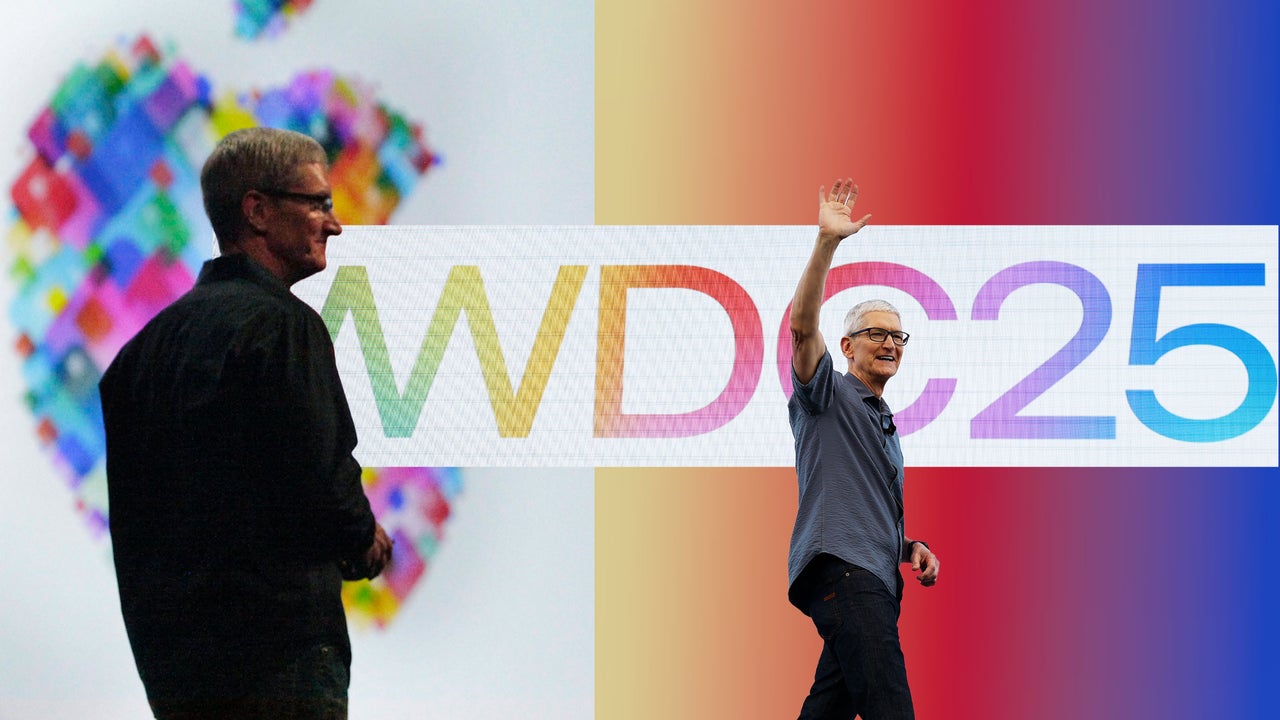
Tim Cook has less than three months remaining in his tenure as Apple’s CEO and, assuming he takes the stage as master of ceremonies at WWDC this week, it will be the 15th (and final) time he has done so as CEO.
Cook’s tenure at the tech giant stretches far beyond Apple’s new product announcements, of course. He has built Apple into a $4.5 trillion company and threaded a political needle that many CEOs have failed to navigate. He also transitioned Apple from a hardware-only company into a services empire, building products like iCloud and Apple Pay into a business unit with annual revenue most other companies would envy.
That said, there’s something about WWDC that serves as a focal point. It’s an event that might not be as splashy as the company’s product unveilings in September, but it’s where Apple pulls back the curtain on new initiatives that often shape its future.
So, as Cook prepares to take the stage for what could be the last time, here’s a look at some of his biggest WWDC moments.
The introduction of Apple Vision Pro
Arguably Cook’s signature WWDC moment, the unveiling of the Vision Pro in 2023 was Apple’s first major hardware launch since the unveiling of the Apple Watch in 2015. It marked, Cook said, the beginning of the age of “spatial computing.” Critics loved it, but with a high price point and a consumer base that has yet to be convinced of the need for virtual or augmented reality, the Vision Pro has struggled somewhat since launch. Apple’s interest in the brand has been less vocal of late, but the company is unlikely to give up on it.
Goodbye Intel
Cook’s announcement in 2020 that Apple would move away from Intel processors to focus on chips of its own design was a “bet the company” moment. Had it gone wrong, Apple’s progress could have been set back by several years, giving rivals a chance to surpass it. The M-series chip, however, strapped a jet to the company’s products, improving the performance of Macs, boosting battery life, and giving Apple more control over its own ecosystem.
iOS 7’s redesign
2013 marked the biggest visual overhaul the iPhone had ever seen (and, arguably, remains the biggest in the product’s history). The “skeumorphic” textures that defined the Steve Jobs era were jettisoned in favor of a more modern interface, designed by Jony Ive. Icons were flatter. The slide to unlock function was introduced and the groundwork for CarPlay was laid. While it faced a mixed reception initially, users quickly adopted it. And, for many Apple users, it marked the real beginning of the Cook era.
Apple Intelligence debut
Two years ago, Cook took to the WWDC stage to reveal Apple Intelligence, marking the company’s entry into the AI race. It was a huge strategic shift for Apple, which had previously relied on the cloud. Like the rest of the AI industry, Apple Intelligence has faced something of a rocky road. Developmental hurdles have forced the company to delay the launch of Siri 2.0 and dramatically dial down all marketing around the initiative. Despite fumbling the launch, Apple continues to move forward in the AI space and is likely to dial things back up in the months and years to come.
Swift Programming Language
The 2014 announcement of Swift, a new programming language, marked a big move for Apple. It was the first time the company had seriously changed its software underpinnings since it bought NeXT, and it lowered the barrier to entry for potential app makers. Swift also let Apple keep up with competitors and allowed developers to change code on the fly without recompiling. Apple spent two years developing Swift before unveiling it to developers, but the community quickly embraced it. It was an announcement that most consumers shrugged at when they heard about it, but one that would ultimately affect them tremendously, giving birth to a wealth of tools and apps.
A moment of silence
Steve Jobs was a legendary founder with an aura that has been unmatched by almost all other corporate leaders, but he was not someone who was seen as an especially empathetic individual. Cook was the anti-Jobs in many ways, and it was never better illustrated than in 2016, when he opened WWDC by asking for a moment of silence for the victims of the Orlando nightclub shooting, where 49 people were killed and 58 were wounded. Calling it an “unconscionable act of terrorism and hate,” Cook’s act gave this tech-intense gathering a very human moment.