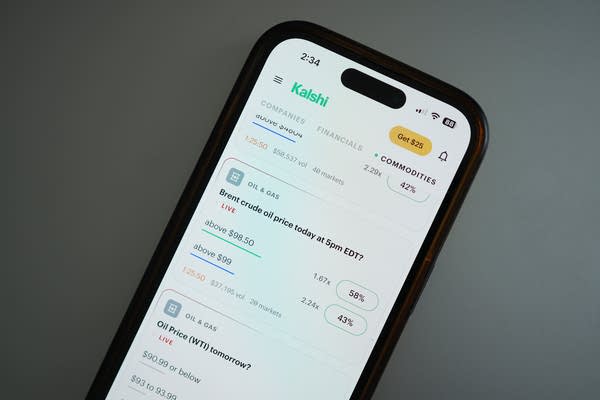
Online prediction markets are chock full of opportunities to wager on outcomes of lawsuits. One involving the prediction markets themselves isn’t among them — at least not yet.
A federal judge plans to decide soon if she’ll block a Minnesota law to effectively ban prediction markets. The sites and a federal regulatory body want an injunction to keep the law from taking effect in August.
On Thursday, U.S. District Court Judge Katherine Menendez heard arguments in the case brought by prediction markets sites Kalshi and Polymarket, as well as the Commodity Futures Trading Commission.
They combined to sue Minnesota over the law set to make it a felony to host or advertise the prediction markets. They’re arguing the federal government – not the states – are the ones permitted to regulate the sites. The law has gained national attention since it is the first in the country to prohibit the markets.
State lawmakers cited concerns about the sites skirting state restrictions on gambling and creating environments where people, especially young adults, can become easily addicted to the sites.
Attorneys representing Minnesota pushed back on the arguments about regulatory authority. They said while Congress gave the CFTC authority to regulate contract markets, many of the questions raised on the sites fall outside that threshold. They said the federal oversight authority doesn’t preempt states from enacting policies to protect the health and safety of their residents.
“The states are allowed and entitled under the Constitution to protect their people from public health and public welfare threats,” said Minnesota Assistant Attorney General Lindsey Middlecamp. “There is an ample record that reasonable minds can differ across the country on how they want to regulate gambling, but certainly the lawmakers of Minnesota were concerned that these constitute predatory gambling platforms.”
Attorneys representing the CFTC, Kalshi and Polymarket said all of the contracts that users consider on these prediction markets are different from bets or wagers that a person would make with a bookie or against the house at a casino.
Their attorneys told a judge that the law violates First Amendment rights to free speech because it deals with advertised messages. They said it could chill free speech of those who want to work with the sites to be sort of a fact checker in some of these questions — providing verification about whether or not something happened.
“It is going to chill our ability, our First Amendment right, to get that information if the potential provider runs the risk of being prosecuted for a felon,” said attorney Thomas Dupree, who was representing Polymarket.
During the hearing, Menendez noted that she’s very aware of more than a dozen cases on this subject around the country as other states have attempted to regulate the markets. But she also acknowledged that Minnesota's law is the first that could impact First Amendment issues, dealing with advertising the sites and the ability of Minnesotans to relay firsthand accounts of events to the sites.
Menendez expects to issue an order soon. She quipped that she hopes that her ultimate decision will not lead to wagers on one of the prediction markets, including when she’ll rule.
“I will not specify a day,” Menendez said, “and I hope that I will not be the subject of any prediction market contracts between now and when I get there.”