
From different colored lunch tickets to growing up in subsidized housing or in a mobile home park, Minnesota candidates aren’t shy about sharing adversity they’ve weathered.
“When you talk about the middle class and working class in this country, I've lived it,” says Angie Craig, one of the Democratic U.S. Senate candidates.
Peggy Flanagan, another Democratic Senate candidate, describes how her mother “skipped meals so I could eat.”
Republican governor candidate Kendall Qualls talks about going “from poverty to prosperity” and calls his life a “case study” about resilience.
The hopefuls for several top offices are using speeches, ads and other opportunities to share their struggles from earlier chapters of their lives. It’s a way for them to draw an affinity with an electorate grappling with financial stress.
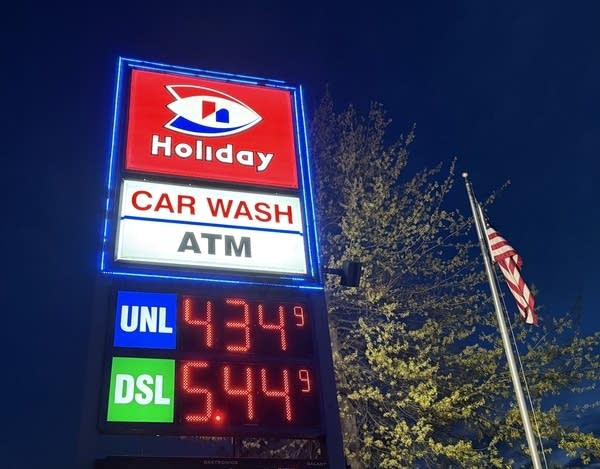
“Affordability and the economy are key issues for the midterm elections,” said Kathryn Pearson, a University of Minnesota political science professor. “In this particular cycle, with this particular economy and with affordability being such a big issue, I think it makes sense that we're seeing candidates really dig deep on their own backgrounds, their own struggles, their own experiences.”
Highlighting the backstories also gives them an in to discuss the parties they think are causing the price surges. For Democrats, it’s President Donald Trump and Republicans in Washington. For Republicans, it’s Democrats who have controlled the Minnesota governor’s office and much of government for an extended period.
Campaigns are always about making connections.
Presidential candidate Bill Clinton had a famous moment in the 1992 campaign when he told an audience member at one of his rallies that “I feel your pain.” That theme would become a touchstone for Clinton’s successful Democratic campaign to unseat Republican President George H.W. Bush in a year when economic anxiety was central to the race.
At a campaign rally in Minneapolis in early June, Craig told a crowd that she’d had to fight her whole life.
“We didn't always have access to health insurance, and there were times when we needed food assistance ourselves. So, this fight that we're in at this moment in time, it is personal,” Craig said.
She noted her mother who was single raised her in a mobile home park, with help from her grandmother.
Craig is far from alone in highlighting moments of hardship that came ahead of a career in journalism, corporate communications and eventually Congress, where she has served four terms.
Flanagan, the current lieutenant governor, has highlighted the importance of government programs that helped her family. She’s appeared in campaign ads outside the apartment building where her mother raised her using a housing voucher and the elementary school where she said she got a different colored lunch ticket to represent it being for a free or reduced-price meal.
“I'm thinking about how unlikely this moment would have seemed to me as a little girl who carried a big box of commodity cheese under her arm like a football home from the food shelf,” Flanagan told DFL delegates as she accepted the party’s endorsement last month.
Without those government programs, Flanagan said she wouldn’t have had the same path to professional success. And, she said, others are facing those hardships after Republicans in Congress placed new restrictions on food assistance and Medicaid.
“Folks are working multiple jobs and still can't get ahead,” Flanagan said. “It shouldn't be this hard, and it doesn't have to be this way.”
Similar messages have taken off among Republican candidates, too, who said they benefited from the American dream. But that’s become harder to realize in today’s landscape.
Qualls, a businessman who gained the Republican Party’s endorsement for governor, often describes his early years growing up in public housing projects in Harlem. His mother raised him with some help from public assistance funding. Later he moved to Oklahoma, to live in a mobile home park with his father.
“I got a public school education, I got enough education to be competitive in a Fortune 100 company,” Qualls said. “I want to make that story available to all Minnesotans, regardless of their backgrounds.”
Michele Tafoya, the retired sports broadcaster who is vying for U.S. Senate as a Republican, said her parents instilled in her lessons of grit.
“I was raised by parents who grew up in the Great Depression,” she said. “My mom and dad taught me that the only thing owed to you in this life is the opportunity to earn it.”
According to publicly available records, the four candidates are on stronger financial footing these days.
Financial disclosure forms show Tafoya and her spouse have assets including retirement funds, bank accounts and stocks valued at several millions of dollars.
Flanagan makes about $105,000 as lieutenant governor. According to a financial disclosure filed last year, she reported assets including bank accounts and retirement holdings between herself and her spouse valued in the hundreds of thousands of dollars.
As a U.S. representative, Craig makes $174,000 a year. According to a financial disclosure form, she and her spouse had investments, retirement funds and bank account balances in the millions.
Qualls doesn’t have as recent of financial reporting available for public view. But according to forms he submitted for an unsuccessful congressional bid in 2020, he and his spouse had millions of dollars worth of retirement funds and rental property income.
Given that the candidates’ economic prospects have improved from where they started, Pearson said candidates need to be thoughtful about how they relate to voters who remain in a more-fragile position.
“As long as the candidates aren't pretending that they're still in that situation,” she said, “I think that they can authentically draw upon past struggles and present them to voters.”
MPR News reporters Peter Cox and Cait Kelley contributed to this story.