
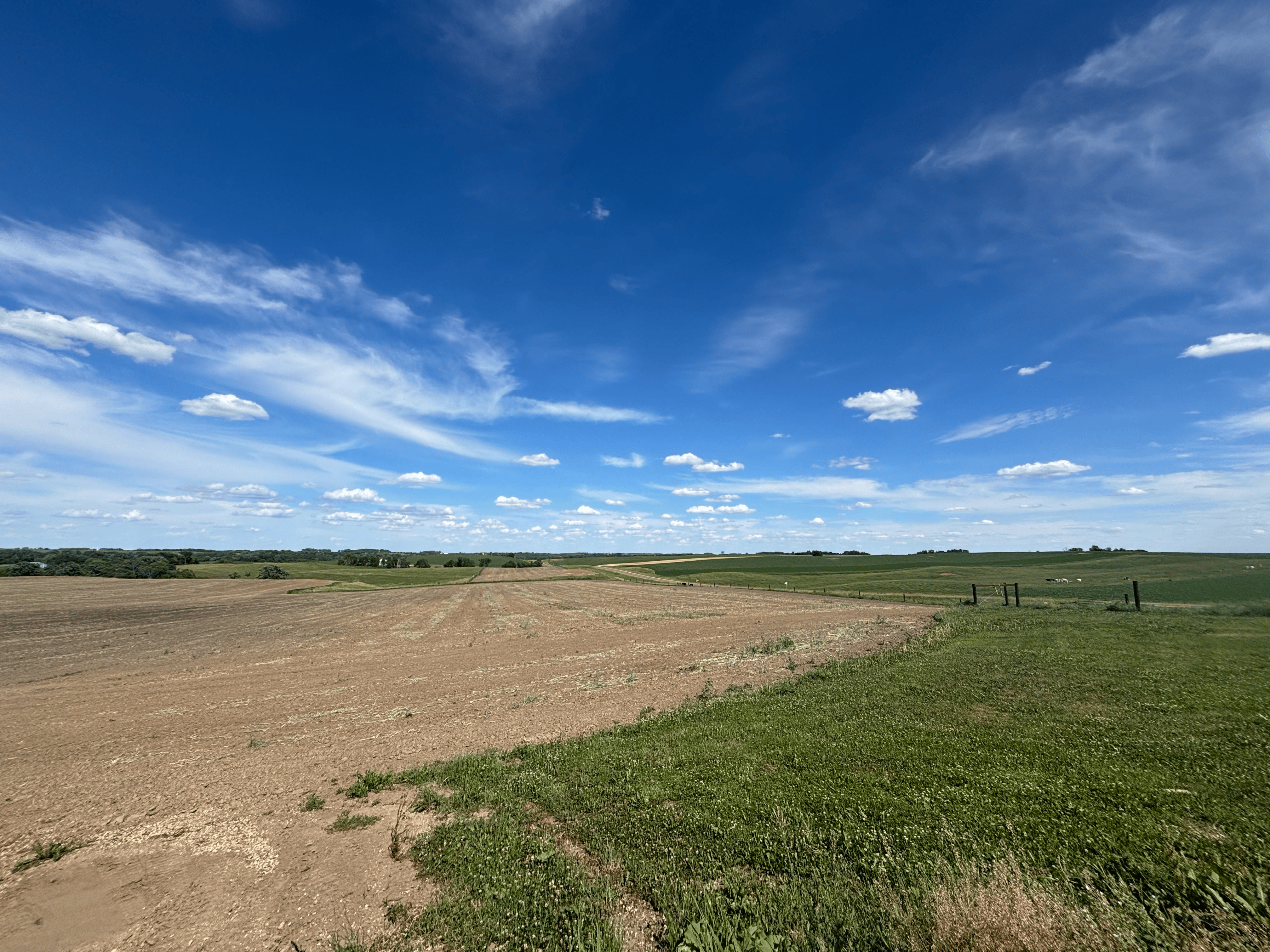
Jason Lohmann had already worked a full day at the lumber yard, but his tasks for the day were hardly over.
“We're going to plant our sweet corn tonight, in that 42 acre field,” Lohmann said as he stood on the edge of his farm in Zumbrota.
Lohmann and his family have lived there for just six years, but he has been farming for a long time. He grew up doing it with his dad just down the road.
“I've been doing it for almost 40 years, some sort of farming,” he said. “I can't just give it up."
Lohmann is on the local school board. He’s served on the township and country education boards, too. And now, running as a Democrat, Lohmann is a first-time state Senate candidate in a district that's Republican territory. His farming background makes him a rarity in a party that isn't popular in rural Minnesota these days.
He’s among a handful of candidates Democratic-Farmer-Labor Party leaders are promoting this election cycle in a bid to court rural voters who once exemplified the "Farmer" in the party's name. With the Legislature closely divided, every race counts – even if it hasn’t been blue in decades.
Lohmann said he's disappointed in the DFL because urban concerns have gotten the party's lopsided attention while voters in greater Minnesota have gravitated toward conservative candidates.
“They literally have ‘Farm-Labor’ in the name, and they have literally forgotten about farmers for the last 20 years,” Lohmann said. “They've decided that they've had their vote, they don't need to talk to them. And you hear that from people in the rural areas: ‘You guys don't want to talk to us. Why should we vote for you?’"
Striking a moderate tone
At its convention in Rochester last month– one that nodded to the DFL’s historic ties to rural voters in videos and in speeches from the stage — party chair Richard Carlbom acknowledged the DFL’s rural struggles.
In an interview, Carlbom said the party is trying to course correct now in a moment when President Donald Trump's tariff policies and high oil prices are handicapping farmers.
“In June of 2025 we deployed 10 organizers, and we put them in the rural parts of this state to make sure that we're working with organizing units in rural areas that want to stand up and get their neighbors involved,” he said. “We have to prove to farmers that we're ready to stand up and fight for them."
It has been a hard fall for the DFL, with its legislative ranks now occupied mostly by lawmakers from urban and suburban areas as well regional centers like Duluth, Rochester and St. Cloud. Farmers are even more scarce in the party’s ranks.
Fifty years ago, the DFL had plenty of state lawmakers who identified themselves as having farm occupations — 25 of them, according to the Minnesota Legislative Reference Library. That same legislative session, 17 Republicans identified as farmers. The high-water mark in the past half-century was 28 for DFLers and 28 for Republicans during different sessions.
The library’s data show the complement of farmers in the Legislature has steadily dwindled in recent decades for both parties but more dramatically for DFLers. In the current Legislature, there are 11 lawmakers who list an agricultural occupation. All are Republican.
Pinched family farmers
Mark Legvold is a retired military veteran and farms corn and soybeans near Northfield. He’s also a first time state Senate candidate running as a Democrat, and said he deeply understands the financial pressures facing farmers because he’s living them, too.
“There’s been a 30 percent increase in the price of fertilizer. That alone is enough to crush most family farms,” he said. “And then we start buying diesel fuel to put into our tractors and our equipment; that also is up about 30 percent because of an unnecessary war in the Middle East. This is pinching family farmers but it's also pinching every single person in Minnesota's economy, whether they're in ag or not.”
Legvold is striking the same moderate tone as Lohmann on the campaign trail, and is promising voters he will work to build bridges in a very polarized Legislature.
"What we need to do is get away from legislation from the extremes on either end of the party. That's where most people reside in Minnesota,” he said. “It’s one of those things that getting up to St. Paul, bringing those voices. Compromising can be rewarded."
Out of touch
Republican Jeremy Munson of Lake Crystal is running for the state Senate in the area not far from Mankato. He has long argued that Democrats are out of touch with rural voters. He farms, too, and during a prior stint in the Minnesota House, he co-founded the RFL -- short for Republican Farmer Labor caucus.
"The DFL really hasn't represented farmers in generations,” he said. He said Democrats have supported too many operational regulations and impediments to pass farms down to future generations.
Munson said that DFLers who pledge moderation on the campaign trail often don’t deliver on that promise once they arrive in St. Paul.
"These candidates believe they can work across the aisle, and they can say, "I'm going to be an independent voice.’ But they get up to St. Paul and it [is] a party line vote on everything,” he said.
Back on his farm, Lohmann admitted running as a Democrat in a reliably red district is hard.
When he’s talking to voters, he empathizes with the financial pressures they’re facing, whether they farm or not. Voters, he said, want their lawmakers to make life more affordable, to fund schools, to lower taxes and to stamp out fraud in public programs — all concerns that Lohmann shares.
While the Senate DFL caucus touts candidates like him, he said they haven't delivered much financial or logistical support yet. Their messaging also makes him uneasy because he’s worried it will lead to more political division.
“I hate them using farmers as a pawn,” he said. “It's 'Farmers are hurting, farmers this, farmers that.' Well, to me, everybody's hurting. This party needs to try and figure out how to get back to their roots and include everybody.”