
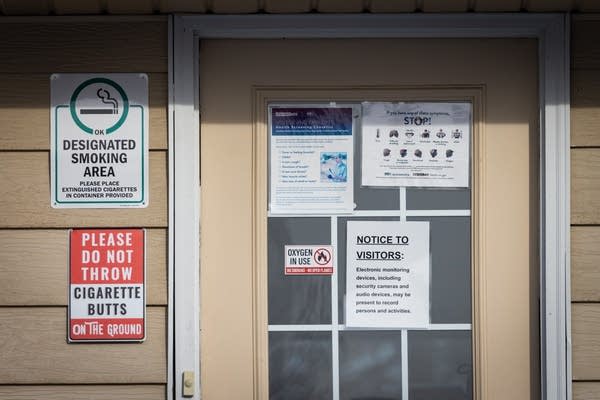
Gov. Tim Walz signed a massive human services bill into law on Wednesday, which includes several changes to the laws governing Minnesota’s group home industry.
The changes follow a series of investigations from MPR News and APM Reports that found the group home industry has exploded in the northwestern suburbs of the Twin Cities overwhelming local police, while the businesses that run them face few consequences when they neglect their residents — even in cases where those residents died.
The law now requires the Health Department to consider the density of group homes in a certain area when deciding whether to award a provider a license . But a stricter regulation, supported by cities in the northwest Twin Cities metro, that would have prevented a new group home from opening within 650 feet of an existing one failed.
“We feel like this is a step forward,” said Jay Stroebel, city manager for Brooklyn Park, a suburb of 80,000 that has more group homes than any other city in Minnesota. “We’re definitely going to be monitoring going forward, kind of how these changes will impact things.”
The new law also says the state has to notify local governments about new group homes in their areas, which wasn’t required previously, and the state can now delegate safety inspections to cities if it chooses.
“We fought hard for Brooklyn Park residents on multiple fronts at the Capitol this session, and I’m incredibly proud of what we were able to accomplish,” Brooklyn Park Mayor Hollies Winston wrote in a press release. “These investments will strengthen public safety, improve quality of life, and help position Brooklyn Park for long-term success.”
The legislature also set aside $150,000 for the Health Department to find a new way to license group homes currently classified as assisted living facilities. Historically, the Department of Human Services licensed group homes as Community Residential Settings, but these settings have been under a moratorium designed to cap the industry’s growth since 2009.
MPR News and APM Reports found that some group home providers were able to circumvent the 2009 moratorium by going through the Health Department. The industry’s growth in the northwestern suburbs is being driven by these facilities. They are also responsible for a disproportionate share of the police calls and deaths.
Even the trade group representing those providers agrees that the state needs a different regulatory framework.
“We’ve got to find a way to make the model work better,” said Matthew Bergeron, a lawyer for the Residential Providers Association of Minnesota.