
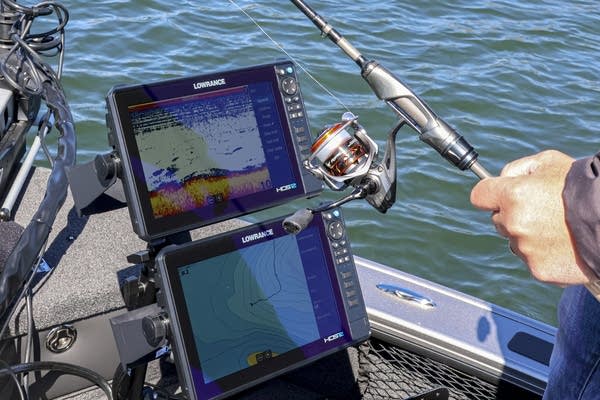
As live-imaging sonar surges in popularity, researchers at the University of Minnesota are preparing to study if the technology could threaten future fish populations across the state.
Often known as forward-facing sonar, the technology lets anglers find and track fish in real time. It’s a major shift from traditional sonar, which only shows what’s beneath a boat.
The technology’s rapid rise has divided anglers. Supporters say it makes fishing more engaging and could attract younger participants to the sport. Critics argue it gives anglers too much of an advantage and could increase pressure on vulnerable fish populations.
“There's a lot of mixed feelings and strong feelings about this technology usage, but we don't really have a foundational baseline test or understanding about how this technology works in Minnesota lakes,” said Cam Mosley, a fisheries ecologist and postdoctoral research fellow at the university.
Mosley and a team of researchers will study whether live sonar changes catch rates and what the long-term effects could be for fish populations in different types of Minnesota lakes.
State lawmakers approved $676,000 for the three-year project from Minnesota’s Environment and Natural Resources Trust Fund, which receives a share of state lottery proceeds for environmental projects.
Researchers will begin by collecting information from angler surveys to understand how sonar is used to target species such as walleye, muskie and northern pike and whether anglers are releasing or keeping the fish they catch.
The next phase is real-world experiments in Minnesota lakes. Researchers will compare their fishing success using live-imaging sonar and traditional two-dimensional sonar during both open-water and ice fishing seasons.
“We're going to evaluate on the ground how that impacts catch rates for walleye,” Mosley said.
The team will use those findings to model if the use of live imaging could deplete fish populations over time. They’ll factor in sonar use rates, natural mortality and hooking mortality — when fish die after being caught and released.
The project starts July 1. Mosley said researchers will share their findings with the public when the study concludes.
Aaron Meyer, co-chair of the Minnesota Muskie and Pike Alliance, has raised concerns about the potential threat of forward-facing sonar on muskies, which are relatively rare and slow to produce. Muskies are typically difficult to catch, but the technology makes them easier to locate.
Meyer said he supports more research on the technology. But he questioned the university study’s methodology and its focus on whether live imaging is improving catch rates, which he said is already abundantly clear.
Mosley said the goal is to give anglers and fisheries managers better information as they consider possible best practices or regulations, with the goal of keeping fish populations sustainable.
“As scientists, we are just here to make sure that everyone has the best information possible to make any decisions or come to a community agreement about this new technology,” Mosley said.
The study will initially focus on walleye, Minnesota’s most sought-after game fish. But Mosley said researchers hope to also look at if live imaging could change populations of species especially vulnerable to angling pressure, such as muskies.
Mosley said the research comes at a time when Minnesota lakes are already facing multiple stressors, including invasive species and warming temperatures due to climate change.
“This is one thing we can control,” Mosley said. “We can understand how this technology works and then share that information and figure out as a community how to move forward.”
The Minnesota Department of Natural Resources, which manages the state’s fisheries, is collaborating on the project.
Marc Bacigalupi, the DNR’s northwest fisheries manager, said the study’s findings will complement work the agency is doing to better understand forward-facing sonar, educate anglers and consider whether any regulation changes are needed.
So far, there’s been widespread support for the project, Mosley said. Regardless of how people feel about forward-facing sonar, they want to understand whether it’s jeopardizing fish, they said.
“I think we all want the same things, which is healthy fish … and for folks years from now to be able to have that same experience when they go to a lake and they catch a walleye,” Mosley said.