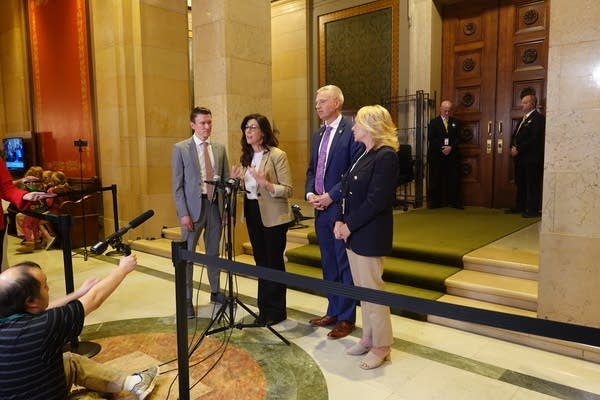
The Minnesota House of Representatives voted 127-5 on Thursday to pass a proposal to create an independent watchdog office over all of state government — almost a year to the day after the Senate approved a companion bill.
The measure is aimed at rooting out fraud and mismanagement in state government and comes after a national spotlight was cast on Minnesota following news that many millions of dollars were siphoned from public programs by fraudsters.
Lawmakers in the tied House negotiated details for many months and eventually settled a disagreement over how law enforcement is involved in the unit.
Initially, cases from the office would be referred to the Bureau of Criminal Apprehension for additional investigation and possible criminal charging. Legislators could opt to place a law enforcement arm under the office later. The independent watchdog entity would operate outside of the executive branch decision tree for the most part.
Rep. Matt Norris, DFL-Blaine, said lawmakers agreed on the concept as a way of tackling fraud, but that it took longer to cement the logistics of a new state agency.
“While the issue of fraud is an urgent one, the vast, unprecedented power of this office is the very reason why it was important for us to move in a thoughtful, diligent manner in crafting this legislation,” Norris said. “The bill has gotten better because of it, and this process has led us to a truly bipartisan, bicameral bill before us today. It had to cook a bit. We had to tweak the recipe, but the OIG turned out better than ever.”
The office would be able to probe public or private entities that administer state dollars. It would also set program integrity standards for state agencies and allow for more communication between agencies about potential bad actors trying to go between various state departments for funding, even after they’ve been flagged.
“I hope that this is the beginning of the light at the end of the tunnel, this and some of the other things because Minnesotans are mad, and they deserve more,” said Republican Rep. Patti Anderson, R-Dellwood. “We need as a state to get our reputation back, or at least to get back to neutral, frankly, and it's going to be an uphill battle.”
Senate sponsors said they hope to adopt the changes implemented by the House soon, teeing the bill up for Gov. Tim Walz’s signature. Walz has said he would sign the bill into law if it reaches his desk.
A group of lawmakers from both parties and both chambers has worked to pass the policy for nearly two years. They said it is one of the most important changes to come out of this legislative session.
“An independent oversight authority, I think is the solution that really meets the level of the problem that we had,” Sen. Heather Gustafson, DFL-Vadnais Heights, said. She sponsored the bill in the Senate. “This isn't the end-all-be-all solution, but it is the most significant anti-fraud piece of legislation to pass in our generation.”
Some Democratic members tried unsuccessfully to put up additional funding to allow for more data sharing and information technology buildout and to maintain that the office would refer cases to the BCA into the future.
Republicans said it’s important that the office be allowed to operate separately from the governor’s office to ensure full independence. It had been a point of friction between House Republicans and Democrats during months of negotiations.
Several lawmakers celebrated the bipartisan nature of the bill and the potential for the office to prevent future fraud in the state.
“We have all felt that frustration, every story that we hear, every report that we see that things are not being done correctly, and turning that into a bill that's before us here today,” said Rep. Pete Johnson, DFL-Duluth. “Fraud isn't just one part. It's making sure they don't have access to our systems. It's making sure that they can't come in one door and keep finding and trying other areas to exploit and take dollars, it's catching them quickly, if somehow they do get access, and then it's holding them accountable in the long run.”
Republicans raised frustrations about the slow roll to reach an agreement on the bill and in the Walz administration’s response to fraud.
“The national news media has talked about fraud again and again and again, and almost every single sentence leads with our great state of Minnesota,” Rep. Jim Nash, R-Waconia, said, noting the headlines about rampant fraud had been allowed to persist for too long. “Let’s make Minnesota great again and put fraud on hold with the Office of the Inspector General.”
If approved, the selection process for an inspector general would begin this summer and that person could be put in place early next year and confirmed by the Senate. The office would have around 40 fulltime employees initially. That could grow if lawmakers later approve a law enforcement division within that office.
The proposal is one of several anti-fraud measures moving through the Legislature this session. Other bills would toughen penalties for defrauding state programs, add more investigators to the Attorney General’s Office’s Medicaid fraud division and make it easier for the state to pause payments when misuse is suspected.