Gov. Tim Walz proposed adding a tax on social media companies Tuesday, suggesting the proceeds be used to counteract workforce disruptions caused by more tasks being done by artificial intelligence.
The proposal is among several features of a Walz budget blueprint that also would expand a family tax credit, shave the sales tax rate and offer financial help to those affected by the federal immigration enforcement actions.
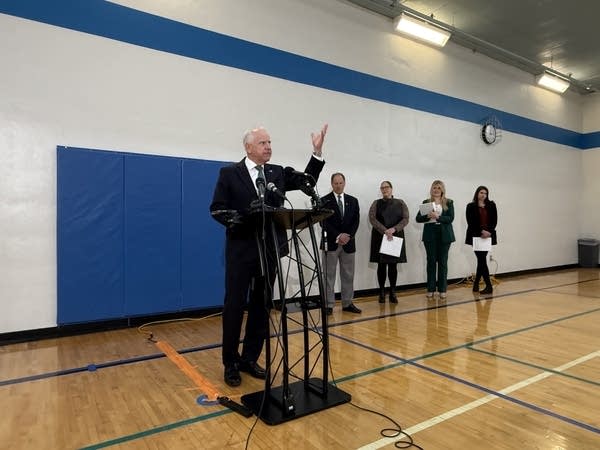
The second-term DFLer presented his supplemental budget plan — the final one before he leaves office — in a YMCA gymnasium in St. Paul. The proposal would need a green light from the narrowly-split Legislature. That’s a tall order given Republican resistance to new taxes.
DFL lawmakers have previously proposed taxing social media companies that host more than 100,000 Minnesota users each month. They argue the companies should pay to access and profit from the resulting information. The tax could help offset the cost of a new state council to guide artificial intelligence technology in Minnesota.
Social media platforms could be in for a popularity tax in MinnesotaThe Walz framework offered just a few details on tax would be imposed: It would scale up based on the number of subscribers to a platform and hit those with the most users with the biggest tax tabs. The revenue would go into a dedicated account to a development fund to benefit people who lose their jobs due to AI’s boom.
“We're asking them to pay their fair share, and most importantly, using those revenues that will come from that tax and starting to build for what is going to be disruptions from AI disruptions to the workforce,” Walz said, “and to start putting Minnesota on the forefront of planning.”
Opponents, including some from the tech industry, have argued before that it would be difficult to carry out and costs could be passed on to users in the end.
Legislative Republicans said the proposed tax was not something they would support.
“These ideas have been broached in the years past. I think we're probably going to end up with the same arguments against those ideas,” said Senate Minority Leader Mark Johnson, R-East Grand Forks. “Again, I don't see a pathway for this happening.”
Johnson said GOP lawmakers could be willing to cooperate on the proposal to boost child care tax refunds.
His budget proposal comes in the backdrop of a recent economic forecast that shows a $3.7 billion surplus could accumulate for the current budget and a small cushion for the next one. But that report cautioned that much uncertainty remains with global strife, continuing tariff volleys and other pressures on household budgets.
The administration says the overall impact of the plan would drive down costs in the long run because growth rates that had accelerated for some programs would be tamped down. If enacted as proposed, officials said the state would remain in the black for this two-year budget and the next.
But the plan won’t be considered as one bill, making the category-by-category details important.
Notable features include recommendations for $33 million in housing assistance and another $10 million in partially forgivable small business loans to dull some of the financial impact of the federal government’s extended immigration operations.
The Senate approved a bill earmarking funding for rent help last week but the proposal has stalled in the tied House. The governor said it’s critical that the state step in to help, saying his plan would help roughly 9,150 renters.
“(Operation) Metro Surge was not only an attack on our human rights, our constitutional rights, it provided ample opportunities for the country to see the moral injury that was put on Minnesota,” Walz said. “But we're left to pick up the pieces, and the costs are in the hundreds of millions of dollars.”
The sales tax cut is one he has sought before. it would trim the state rate from 6.5 percent now to 6.425 percent but expand it to more things, notably professional business services.
Walz also reiterated his call for gun violence prevention measures, including a ban on assault-style weapons and high capacity magazines. To combat fraud, he said the state should establish an independent watchdog over state government, update outdated software counties use to deliver health and social services benefits and boost detection and oversight of state programs.
Money to implement those priorities is part of the revised budget he will send to the Legislature.