
Despite the deep polarization in state politics, many of Minnesota’s hunters, fishers and outdoor enthusiasts are coming together to try to find common ground around issues related to protecting the state’s treasured lakes, rivers, parks, trails and wildlife.
More than 400 people attended the Minnesota Department of Natural Resources' annual roundtable discussion in Brooklyn Center last week to brainstorm and share perspectives on issues that may wind up before the state legislature later this year.
DNR experts hosted over 16 panel discussions on issues such as the use of drones in hunting, forward-facing sonar in fishing, the possibility of ticks being carriers of chronic wasting disease and shoreline protection strategies, to name a few. While the DNR took the lead, the discussions were largely driven by audience participation.
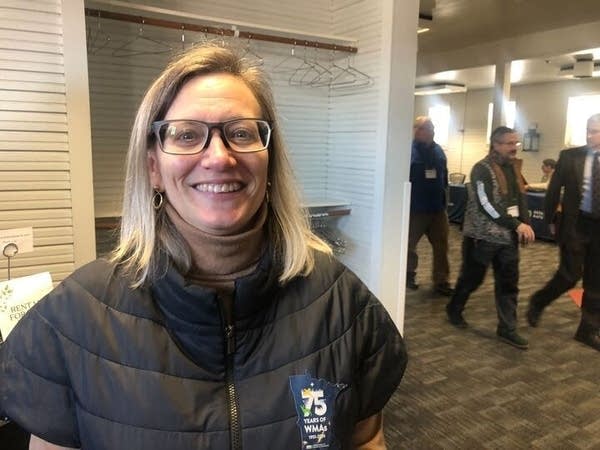
“Our natural resources are something that, across the state of Minnesota, people care about,” said DNR Commissioner Sarah Strommen. “Our mission starts with the words, ‘We work with Minnesotans,’ and so today is really about that part of our mission.”
The DNR’s first female commissioner said even though people may disagree on many topics, the need to conserve the state’s natural resources isn't one of them.
"We live in a very divided time, and so, to see this moment of unity around something and a shared value is huge,” she said. “We also had a wonderful panel this morning with legislative chairs of the Environment Committee, and we saw unity there, too."
The meeting was overshadowed by last week's killing of Renee Macklin Good by a federal ICE agent in Minneapolis just two days before. Strommen said that incident is all the more reason why it's important at a time like this to find common ground.
"Today (Friday) is about exactly some of those values that the governor talked about in declaring (it) as a ‘Day of Unity’ in Minnesota,” she said. “Here we have unity in spades, really, in this event — 400 people who are here to share their values around natural resources."
This year, the DNR is celebrating the 75th anniversary of the establishment of the first Wildlife Management Areas in the state. According to the department, Wildlife Management areas were established to “protect wildlife habitat and provide opportunities for hunting, trapping, fishing and other recreational activities.” There are now more than 1,500 of them across the state.