
Minnesotans are facing a lot of health care challenges right now, especially in rural parts of the state. Costs are skyrocketing, clinics are closing, and even finding a provider or specialist to get the care you need can be difficult.
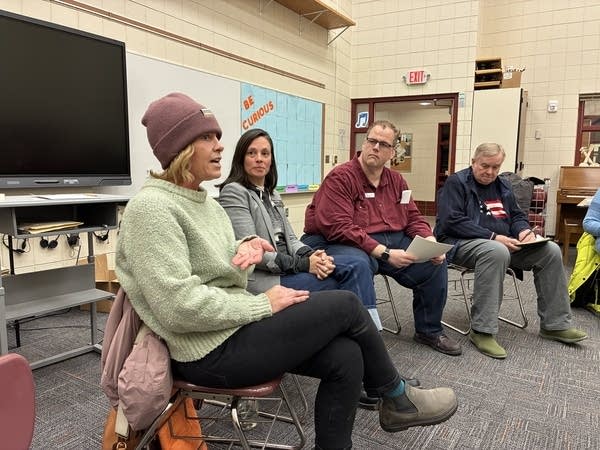
So as state lawmakers prepare for the upcoming legislative session that begins next month, some of them are meeting with rural Minnesota residents to hear from them directly about their health care needs, and how the crisis of rural healthcare affordability and accessibility is impacting them.
Since the fall, legislators have met with folks in Northfield, St. Peter, St. Cloud, Red Wing and Winona. There are plans to hold listening sessions in Hermantown and Moorhead next.
Kristi Pursell, a DFL state representative from Northfield, helped plan the sessions with some colleagues, originally focusing on southern Minnesota.
"I wanted to make sure that people in greater Minnesota felt listened to and that our particular struggles don't go unnoticed just because it's tough to get to the capital,” Pursell said. “And I wanted to get my more Metro colleagues to come to these places to be able to hear firsthand what the unique challenges are."
One of those challenges is the closure of hospitals, clinics and other health care facilities. Just last month, Mayo Clinic closed six rural clinics in southeastern Minnesota, and in November, Allina Health announced it would close its birthing center in Faribault.
Another challenge is that health insurance premiums are often more expensive in greater Minnesota compared to the Twin Cities metro area. And it can be harder to find certain kinds of providers in rural parts of the state, especially specialists, who accept various insurance policies.
At the Winona listening session last month, Janet Hilliker of Winona, 77, shared with legislators how difficult it has been for her to get an in-network mental health appointment in the area. Her local hospital told her it would be a two month wait. Anxious for help, she paid out-of-pocket to see a private provider sooner. But that was expensive.
"The fact that our really good hospital doesn't have mental health opportunities open as soon as you really need them, that's just appalling to me,” Hilliker said.
Alex James, also of Winona, said he and his girlfriend have struggled to find a local dentist that will accept his girlfriend’s Medicaid insurance. The 19-year-old said they’ve looked for months for someone to fix her chipped tooth and have only found options in the metro area – more than two hours away.
Rural areas also have more farmers, who often have to rely on purchasing coverage on the health insurance marketplace, like MNSure. That can be expensive, and it’s going up even higher for many Minnesotans, as the tax credits meant to lower the cost of the insurance expired at the beginning of January after Congress failed to reach a compromise.
The loss of these credits is especially problematic for people living in southern Minnesota, including Winona. Premiums are typically higher than in other parts of the state in part because Mayo Clinic, which provides highly specialized care, is the dominant provider.
Pam Hartwell, who has a small family farm in nearby Dresden, told legislators at the Winona session that she’s struggled to afford marketplace insurance over the years, even before the tax credits expired. Unable to work full time jobs and farm at the same time, Hartwell said she took on part-time jobs for years, which didn’t provide health benefits.
“Over the last 13 years, I’ve definitely spent the majority of that time uninsured, which is really scary when you're wrestling goats and operating chainsaws and living on a farm and also aging,” Hartwell said. “I'm a 56-year-old woman, and things on your body just start breaking down. And when you don't have health care, you don't have a regular physician. You don't have any of that ongoing human maintenance that we need.”
Legislators at the Winona session listened, asked questions, expressed their own frustrations with the health care system, and offered themselves up as resources. Besides Pursell, Republican Rep. Aaron Repinski, who represents Winona, was there, as was his predecessor, Gene Pelowski. Democratic Rep. Tina Liebling also participated along with a couple of other DFL lawmakers from the metro area.
Repinski spoke at the end, explaining that since the Minnesota House of Representative is currently in a tie – with an equal number of DFL and Republican leaders — there’s more room for negotiation and compromise.
“Hopefully we can work across the aisle,” Repinski said. “That's why I'm here, so we can initiate conversations and come back with some common sense solutions to a lot of the problems we have.”
Pursell said that is exactly what she was hoping to accomplish in these sessions; that instead of living in their partisan and rural and urban silos, she and her colleagues can gain a better understanding of people’s needs across the entire state and find some common ground.
“I wanted to provide all of us with a similar context,” Pursell said. “I know now that the nine or 10 different colleagues of mine – who were in these different rooms with me – I know that they have heard some of these same stories that I have heard, and so we have just a common baseline for saying, we know that…this is a problem, and so now let's try to fix it.”