
Minnesota is one of 21 states suing the U.S. Department of Housing and Urban Development over funding cuts to long-term programs that could put more than 3,600 Minnesotans at risk of losing their homes.
The cuts target permanent supportive housing, a research-backed approach to addressing homelessness that moves people into affordable housing without preconditions and with access to built-in support, like a caseworker or mental health care. HUD announced the changes earlier this month.
The changes also disrupt ongoing federal grants which had previously been easily renewed, leaving communities scrambling to turn in applications that align with the administration’s priorities.
In Minnesota, people benefiting from these types of programs include children, seniors, veterans, people with disabilities and survivors of domestic violence.
MPR News spoke with residents and service providers affected by the cuts.
Just over a year ago, Hennepin County’s permanent supporting housing program allowed a single mother of two named Mary to escape domestic abuse. MPR News is only using part of her name because of that.
The unraveling of Mary’s life happened abruptly.
“The landlord decided that she wanted to sell the house and gave us 30 days after 13 years of living there,” she said. “We were left to stay where we could.”
That Minneapolis house had been where her middle-school daughter discovered her love for spooky movies and where her kindergarten-aged son walked his first steps.
Mary had no savings and lost her job at a nonprofit soon after that. Unable to find another home, her family split up.
Mary ended up living with an abusive former partner and her daughter moved in with her grandmother across town.
“It was hard not being able to see my mom when I wanted to,” her daughter said. “When I needed her, I couldn’t go to her because we lived so far away.”
The county provided a safety net: access to a safe place to live.
Within a few months of losing their home, her family was placed in a two-bedroom apartment in the suburbs of Minneapolis where she and her neighbors pay steeply discounted rent.
Caseworkers on site help make sure the families living there have their basic needs met. They have driven Mary to medical appointments and made sure her first-grader had a warm coat.
“I think that this place has saved all of us,” she said, referring to her family and neighbors who escaped homelessness and domestic violence.
But now, the Trump administration is reversing course from permanent supportive housing. In just Mary’s apartment building alone, there are 100 other children at risk of losing their homes.
Previously, about 90 percent of federal HUD dollars that reached local communities was allocated for permanent supportive housing. Now, only 30 percent of federal HUD dollars can be spent on those programs.
“This is a hammer blow for the system if it goes through as currently set out,” said David Hewitt, the director of Housing Stability at Hennepin County.
Hennepin County is one of ten local jurisdictions in Minnesota that funnel federal funds to housing homeless people. It stands to lose $12 million for permanent housing.
In a written response to an MPR News inquiry, a spokesperson for HUD said the department “refutes any claim or assertion that reforms will result in increased homelessness.”
The spokesperson, without evidence, blamed Housing First policies for increased homelessness nationwide.
A recent federal report showed homelessness across the country had increased 18 percent over the previous year. Local planning bodies reported rising housing costs, the expiration of pandemic-era rental assistance, and increased migration and displacement from natural disasters as factors behind that rise.
“We hope current permanent supportive housing providers will shift to transitional housing by providing robust wraparound support services for mental health and addiction to promote self-sufficiency,” the HUD statement read. “We also want to bring new players to the table by encouraging faith-based organizations to step up.”
Hewitt, with Hennepin County, said making these shifts in the timeline provided is unrealistic. “Developing $12 million worth of new street outreach and transitional housing in less than two months is pretty much impossible,” he said.
‘A day that will live in infamy’
Permanent supportive housing is “the invisible backbone of our community,” said Chris LaTondresse, the president of Beacon Housing Interfaith Collaborative, which operates more than 600 permanent supportive housing units statewide.
LaTondresse previously served as a Hennepin County Commissioner and chaired the county’s Housing and Redevelopment Authority. He said the day HUD announced the cuts to permanent supportive housing was “a day that will live in infamy for any of us that have been working on advancing proven bipartisan solutions on homelessness.”
Decades of research has given permanent supportive housing a positive reputation across party lines. Studies show that supportive housing placement saves communities money from emergency room and jail costs.
And data suggests the majority of people who are housed through permanent supportive housing stay housed. In some studies, that figure topped 90 percent — including in Hennepin County, where more than 2,500 people were placed in permanent housing last year.
The new HUD rules don’t just walk away from this approach. They also relay an expectation for communities to follow an executive order that calls for strict camping bans nationwide and encourages governments to commit homeless people with mental illness to institutions long-term and against their will.
Additionally, it shifts the majority of HUD funding to a competitive process that gives the federal government more control over how local communities approach homelessness.
“That’s billions of dollars,” LaTondresse said. “It’s going to go to the administration’s preferred vendors and priorities. The opportunity for waste, fraud and abuse in that alone is just breathtaking to contemplate.”
The changes to HUD’s funding mechanism will allow the administration to tie funding for housing to local policies around gender identity, immigration and encampments — and whether or not projects include work and drug treatment mandates.
Cathy ten Broeke, who leads the state’s Interagency Council on Homelessness, said Minnesota will continue to direct its resources toward proven solutions that align with its values.
There are “so many different people in our community that we need to put our arms around,” she said. “The common denominator that every single one of those human beings needs is connection to support and connection to a safe and stable place to call home. And that is what we will continue to focus on.”
Still, the state relies on $48 million in federal funding from HUD.
“If the community feels like homelessness is really challenging now, which of course it is, this will be demonstrably worse,” ten Broeke said.
She said she wants Minnesotans to understand the stakes and take action, including by imploring Congress to intervene.
The lawsuit filed Tuesday alleges HUD illegally proceeded with the changed rules without receiving congressional authorization and abandoned longstanding Housing First policies without explanation or acknowledgement of the tens of thousands of people who would face eviction.
“If the Trump administration’s attempts to cut this funding go through, tens of thousands of formerly homeless people will end up getting evicted from their homes through no fault of their own,” Minnesota Attorney General Keith Ellison said in a statement.
Keeping it ‘good’
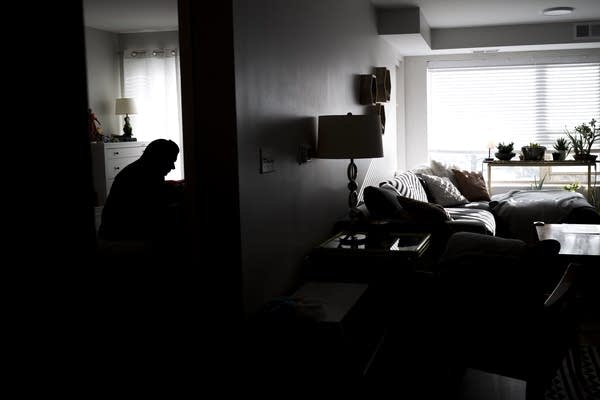
These days, Mary’s apartment is an oasis. A safe haven. The refrigerator is a rainbow of alphabet magnets and family photos. There are brightly colored children’s books for her son to practice reading and bins of plastic Legos.
It’s a place where the single mother is finally able to sit down and breathe. Mary said her first-grade son, a silly “mama’s boy,” has been encouraging her to do morning meditations. She said she’s just beginning to get out of crisis mode.
It’s not a perfect situation for Mary and her family. Neighbors come from a variety of complex backgrounds and some days can get “chaotic,” she said. Ultimately, Mary hopes to buy her own house in Minneapolis. But for now, her family is safe and they can be together. Permanent supportive housing, she said, is a “necessity.”
“When we’re all good, everything’s good. You know what I mean?” she said, seated on a couch beside a row of thriving succulents. “I try hard to keep it good.”
This report was produced as part of a collaboration between Minnesota Public Radio News and The New York Times's Headway Initiative, focused on covering housing in Minnesota. This reporting is supported by the Stavros Niarchos Foundation (SNF), with the Local Media Foundation serving as fiscal sponsor. Funders have no control over the selection, focus of stories or the editing process and do not review stories before publication.